
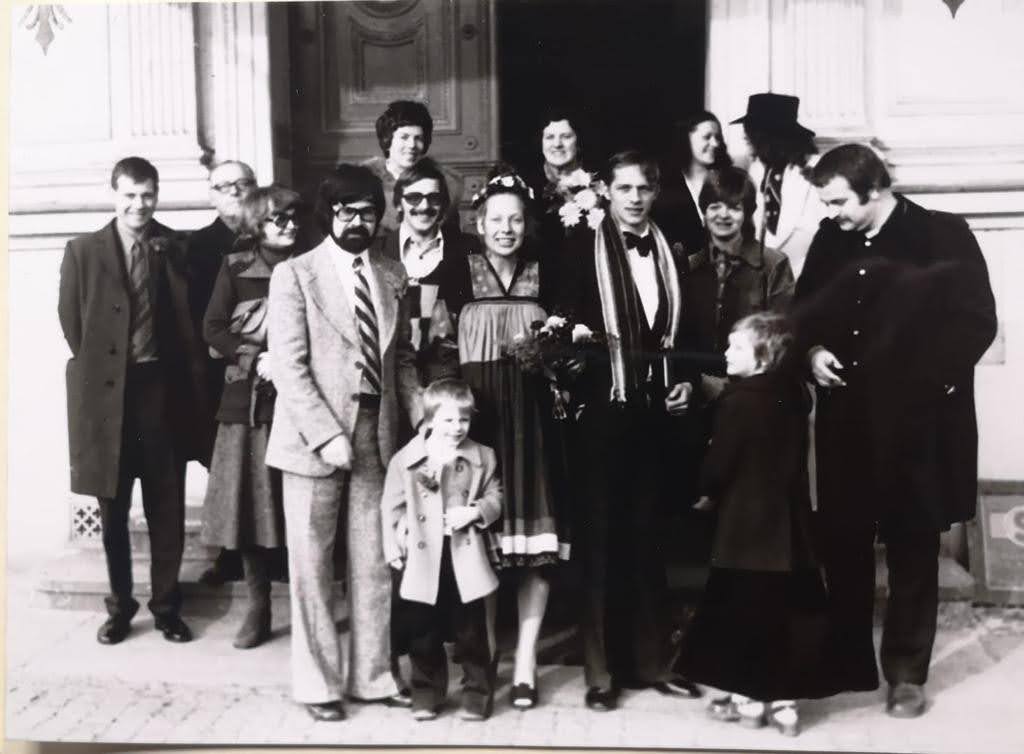
Or better: May I introduce you to my family tree?
We are living in a rush. Sometimes I have overlooked the importance of things that cannot be purchased with money. Namely: history and heritage. But now I believe that understanding your own history is crucial because it provides you with a unique perspective and insight into the influences that your ancestors may have had on your life. This knowledge can help you embrace your unusual traits and transform them into a source of positivity. I experienced this myself when I learned about my strong passion for baking while living at the foot of the Pyrenees. Although neither of my parents were exceptional bakers, they did enjoy making cookies for Christmas and cakes for our birthdays. However, this didn’t fully explain my intense need to bake.
So as a young adult, I wasn’t really aware of where my family’s roots were. When I got closer to Greek culture, I was surprised to learn that each person answers the question ‘where do you come from’ with the place where their father was born, even though they were born in another place themselves.
The generation born in Germany into the last days of WWII, the generation of my parents, was the one that broke with traditions and established rules. They questioned their parent’s generation harshly, for reasons you can imagine. As a result, my generation has grown up with a rather distant relationship to grandparents or the family’s legacy. Of course, this may not apply to all families in Germany, but I have found it as a character trait amongst my friends and acquaintances.
So as a young adult, I wasn’t really aware of where my family’s roots were. When I got closer to Greek culture, I was surprised to learn that each person answers the question ‘where do you come from’ with the place where their father was born, even though they were born in another place themselves.
But not all cultures embrace their ancestry as e.g. Greeks do. I once witnessed a dialogue between a young Greek and a young Icelander in a wedding in a tiny village in the Pindos mountain range. One claimed that the Icelandic system of surnames gives you much more freedom of movement without being tied to a family you didn’t choose. Icelandic surnames are born and die within one generation, as they only refer to the mother or father of each individual. The other claimed that you never walk alone when you can always rely on cousins and related folk in faraway places.
Getting in touch with these approaches inspired me to look into my family’s history, and – alas – it is infinite.
I want to share with you a few findings that might inspire you to start the divertimento of discovering people who have been around before you. Some might be tragic, some empowering – I tell you a few of mine:
Franz Rupp, the cousin of my maternal grandmother, was a prodigious pianist in southern Germany, married to an opera singer of Jewish faith, Stephanie Schwarz. Both where banned from performing in the early third Reich and then migrated to the US to avoid persecution by Hitler’s nazi-terror.
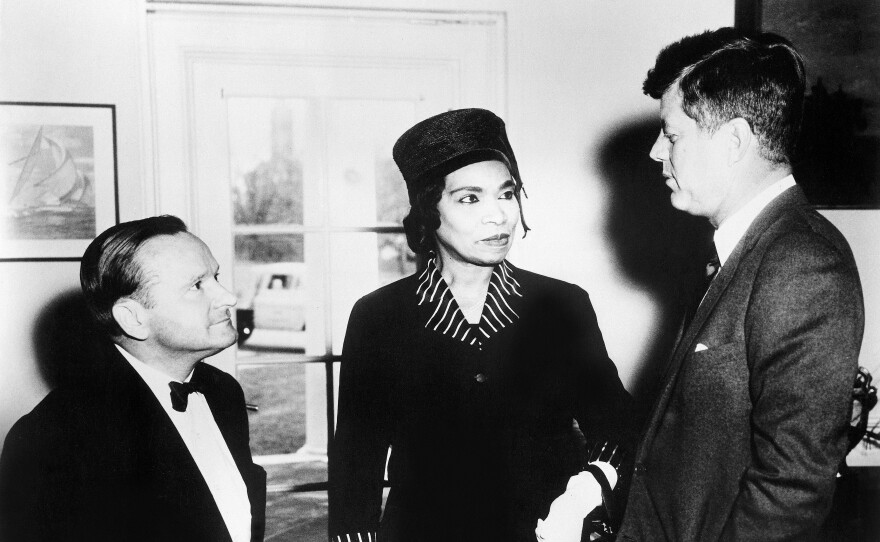
Once settled in the US, he struggled at first but Franz Rupp then formed an artistic interracial Duo with the singer Marian Anderson. They challenged many racist laws still in vigour in some southern states of the USA, but, thanks to their brilliance, they were broadly successful and she even sang at the White House. Banned from performing inside the White House because of Marian Anderson’s color of her skin, she then sang open air at the Lincoln Memorial. In my archive of family pictures, I have pictures of both of them talking to JF Kennedy or at the house of Frida Kahlo and Diego Rivera in Mexico.
A cousin of my mother, Hannelore Cremer, was an actress who was very influential in the 1950s, as she played a modern housewife in a TV commercial for the German baking brand ‘Dr Oetker’. Many women envisioned themselves as similar to modern working girls and skilled homemakers. In private, she told me she wouldn’t have ever managed to learn to cook, giving me a clever smile.
On my father’s side, inner-European migration is embedded in my DNA. Not only did my great-grandparents leave Ljubljana and move to Austria due to the breakup of the Austro-Hungarian Empire, but my surname is also one of the many that left Switzerland over three hundred years ago due to famine and maybe religious or political struggles. My famine-fleeing ancestors had survived abroad by founding confectionery businesses and by trading and roasting coffee in the places where they were allowed to settle. First in Italy, maybe Venetia, and later in Ljubljana.
On my paternal grandmother’s side, her brother Egon Seefehlner has written a biography with thrilling insights into his -and therefore also mine- ancestors’ lives. Seeing that people travelled and traded between Bavaria and Hungary even centuries ago was very insightful for me, as someone who feels like a European. On the other Hand, of course, there have been me amongst my ancestors who have fought in wars against nations that are now our closest friends. Because this is also what European history is about: overcoming millennial enmity.
The importance of storytelling
I might do another post on my broader family story another day. For me, it is a source of inspiration and life lessons. But my aim today was to give you an idea of my roots and the power of storytelling. By searching my family tree, not only have I learned why baking is a survival tool for me, but I have also gained a better understanding of who I am and the struggles of others. In the USA, storytelling is a factor that moves mountains. We, in Europe, should start learning more about our individual histories to raise our consciousness of who we are and use them as tools to get closer to each other, too.
Leave a Reply